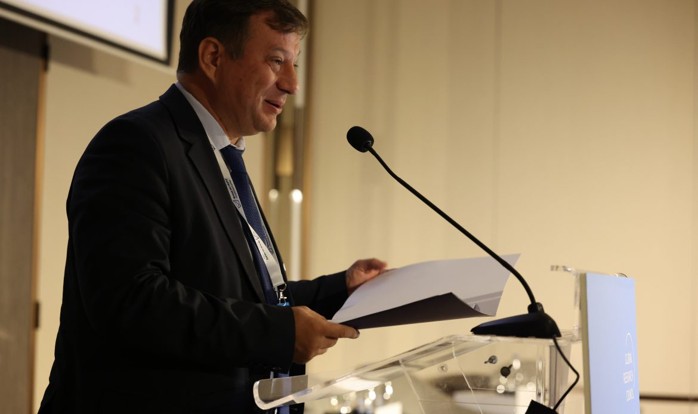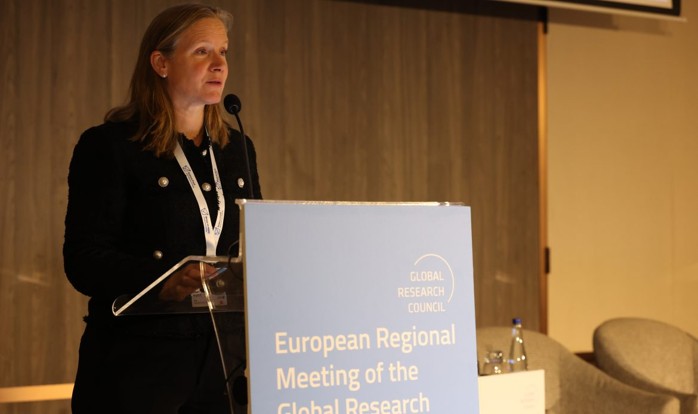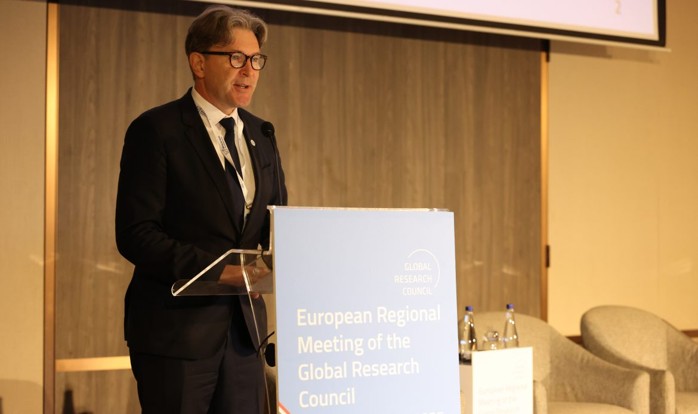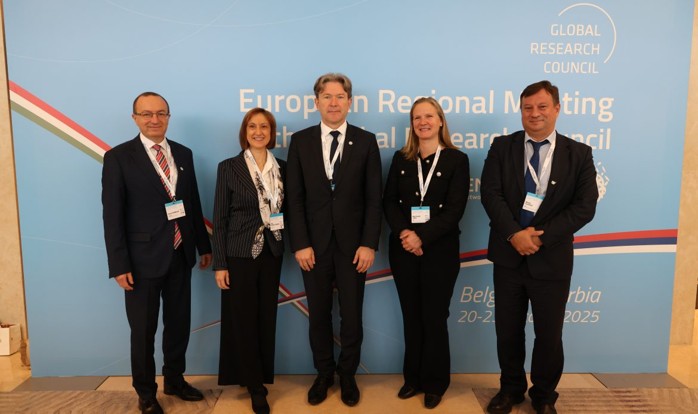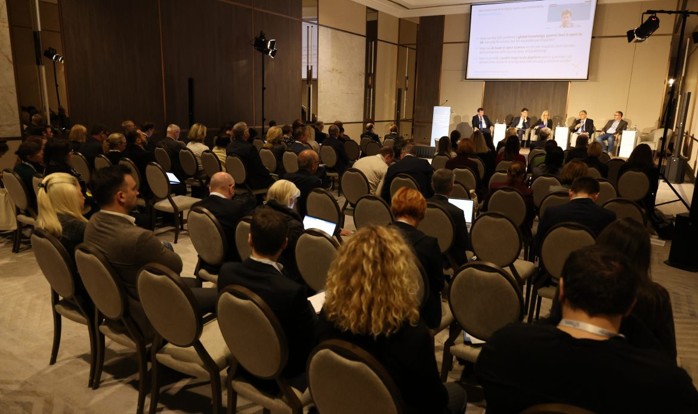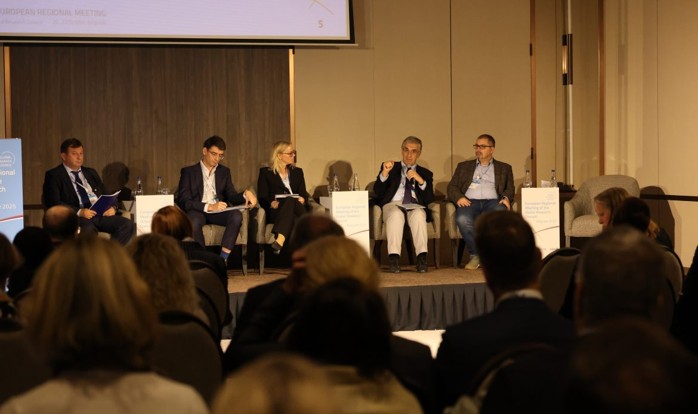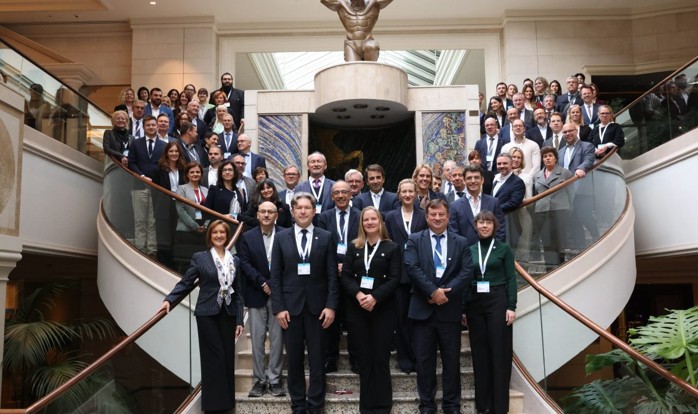


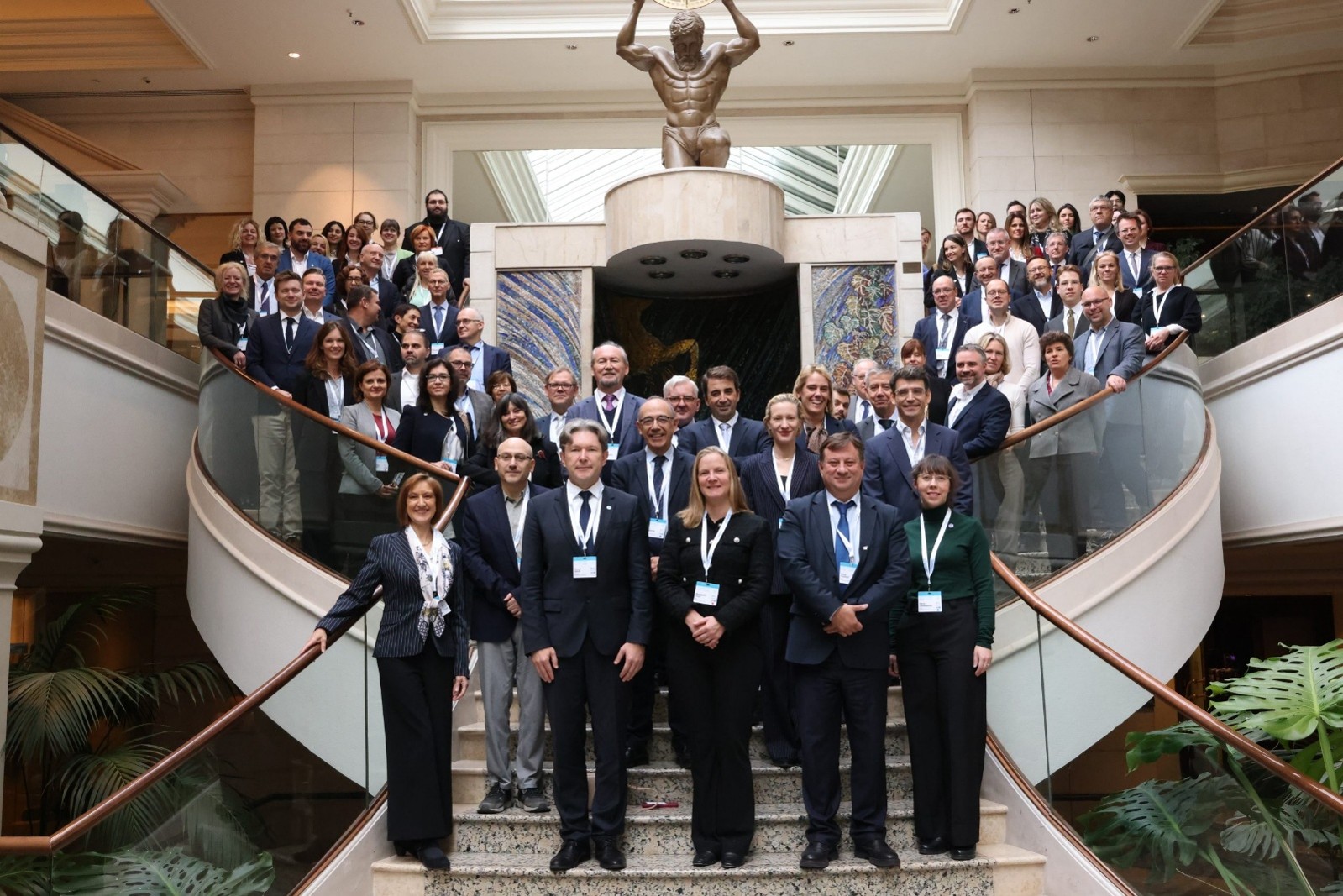
The Science Fund of the Republic of Serbia hosted the European Regional Meeting of the Global Research Council (GRC), one of the most significant gatherings in the field of research funding. The meeting brought together more than 80 representatives of leading European institutions responsible for funding scientific research, as well as representatives of influential funding bodies from China, Japan, Thailand, and Pakistan.
The European Regional Meeting of the GRC, held in Belgrade from 20 to 23 October, was jointly organized by the Science Fund together with Science Europe—one of the most important organizations in the field of science policy—and the Hungarian Research Network (HUN-REN). This year’s meeting focused on open science, the use of artificial intelligence in research, and sustainability in science.
During the meeting in Belgrade, representatives of European research funding organizations discussed how to contribute to a more open and equitable system for knowledge exchange, and how modern tools such as artificial intelligence could accelerate scientific research and technology transfer. Discussions also addressed the responsible use of AI in science and the role of research in advancing sustainable development in global society through new technologies.
The Acting Director of the Science Fund, Professor Nenad Filipović, PhD, emphasized that the GRC meeting represented an important opportunity to strengthen cooperation between research funding institutions and to jointly reflect on how science could further advance society.
“For the Science Fund, hosting this meeting was a privilege and an important step toward further strengthening our role in the global research community. Through joint work, we can build an environment that is open, responsible, and sustainable, using the potential of new technologies, including artificial intelligence, to ensure that knowledge is truly accessible to all,” said Professor Filipović.
The President of Science Europe, Professor Mari Sundli Tveit, PhD, noted that the European Regional Meeting highlighted the importance of international cooperation in addressing shared challenges facing research systems.
“This gathering allowed us to exchange perspectives and strengthen common approaches to open science, sustainability, and the responsible application of artificial intelligence. These discussions not only contributed to the development of fair and globally connected research systems but also ensured that science continued to play a key role in addressing global challenges,” she stated.
The Director General of the Hungarian Research Network (HUN-REN), Roland Jakab, emphasized that the conference themes were strongly aligned with HUN-REN’s strategic vision.
“At HUN-REN, we envision a research ecosystem that is mission-oriented, globally connected, and socially responsible. We encourage interdisciplinary collaboration and actively participate in shaping the role of artificial intelligence in research—not only as a tool for discovery but also as a subject with significant societal impact. Our network is committed to advancing open science practices, promoting the ethical use of AI, and supporting research that contributes to a resilient and sustainable society,” said Mr. Jakab.
The perspectives of European officials on these key topics were expected to contribute to global discussions that would continue at the annual GRC meeting in Bangkok in May 2026 and help shape a shared global approach to challenges related to open science, artificial intelligence, and sustainability.